
They Were Fine. And Then They Weren't. The Silent Health Crisis Happening in Living Rooms Across America


By Katie Rodne, No Senior Left Behind, LLC
You know someone like this.
Maybe it is your parents. Maybe it is your neighbor. Maybe it is someone you love deeply who used to be the most active, vibrant, full of life person you knew.
And then something changed.
Maybe it was COVID. Maybe it was a minor health scare. Maybe it was a hard winter, a lost friend, a move to a smaller place that felt safer and more manageable. Maybe there was no single dramatic moment at all — just a quiet, gradual retreat from the life they used to live.
And now they sit.
They sit in the morning. They sit through the afternoon. They sit through the evening news and into the night. The world that used to include travel and friends and activity and purpose has slowly, quietly contracted — until it fits almost entirely within the four walls of a living room.
And when you ask how they are doing?
They tell you they are fine.
COVID Changed Everything — And We Are Still Reckoning With It
The pandemic did something to our seniors that we are only beginning to fully understand.
Overnight the activities that kept them physically mobile and socially connected were gone. The winter trips to Arizona. The weekly card games. The church on Sundays. The grandchildren visiting. The daily rhythms that structured their time and gave their days meaning and movement.
Gone.
And for many seniors — particularly those who were already in their seventies and eighties — the habits that filled that void were sedentary ones. Sitting. Watching television. Staying home because home felt safe. Withdrawing from the world a little more each week because the world had become confusing and frightening and easier to avoid.
The tragedy is not what happened during COVID.
The tragedy is what happened after — when the world reopened and millions of seniors did not.
They had found a new normal. A smaller, quieter, more sedentary normal. And by the time the people who loved them realized how dramatically things had changed — the decline was already well underway.

What Sitting Still Actually Does to the Human Body
Let's be blunt about this. Because it deserves bluntness.
The human body is not designed for stillness. And what happens to a senior body that stops moving is not subtle — it is serious, measurable, and in many cases permanent if left unaddressed long enough.
Muscle loss happens faster than you think. After the age of 60 the body loses muscle mass at an accelerated rate — a process called sarcopenia. In an active senior this process is slow and manageable. In a sedentary senior it is rapid and relentless. Muscle loss affects everything — balance, strength, the ability to rise from a chair, the ability to walk to the mailbox, the ability to live independently. Once significant muscle mass is lost it is extraordinarily difficult to rebuild. Prevention is not just easier than reversal — in many cases prevention is the only realistic option.
Dehydration becomes chronic and dangerous. As we age the body's sense of thirst diminishes dramatically. Seniors often do not feel thirsty even when they are significantly dehydrated. A sedentary senior who is not being gently reminded to drink water throughout the day is almost certainly chronically mildly dehydrated — and the consequences are serious. Chronic dehydration in seniors causes cognitive fog, confusion, urinary tract infections, constipation, dizziness, falls, and kidney stress. It mimics and accelerates dementia symptoms. It is one of the most common and most preventable contributors to senior health decline — and it is almost entirely invisible until it has already caused significant damage.
Joints stiffen and mobility decreases. Joints that are not moved regularly become stiff, painful, and progressively less functional. The senior who stopped taking their daily walk because it became uncomfortable finds that the discomfort increases the longer they avoid walking — until walking itself becomes genuinely difficult. This is not an inevitable consequence of aging. It is a consequence of sedentary aging — and it is largely preventable with consistent daily movement.
Appetite disappears. Sedentary seniors burn fewer calories and often lose their sense of hunger. They skip meals. They stop cooking. They eat less and less nutritiously — which compounds every other health challenge they are already facing. Nutritional deficiency in seniors accelerates muscle loss, cognitive decline, immune dysfunction, and bone density loss simultaneously.
The cardiovascular system weakens. The heart is a muscle. Like every other muscle in the body it requires regular work to stay strong. A sedentary lifestyle accelerates cardiovascular decline in seniors — increasing the risk of heart disease, blood pressure dysregulation, and stroke. The senior who used to walk to Arizona in spirit — who traveled, explored, and kept their body moving — had a cardiovascular system that reflected that activity. The senior sitting in a chair for six years does not.
Cognitive decline accelerates. The brain requires stimulation, social engagement, problem solving, and genuine human connection to maintain its health and sharpness. Without these inputs the brain literally changes — neural pathways weaken from disuse, the risk of dementia increases, memory falters, and the ability to engage with the world becomes progressively harder. Social isolation has been shown to accelerate cognitive decline more powerfully than almost any other single factor. More powerfully than genetics. More powerfully than many medical conditions.
The brain that is not being used and connected is the brain that is quietly declining.
Depression moves in quietly. It does not announce itself. It arrives as a gradual dimming. Less interest in things they used to love. Less energy. Less laughter. Shorter phone calls. Fewer questions about what is happening in your life. A flatness where there used to be spark.
Seniors themselves often do not recognize it as depression. They call it tiredness. They call it getting old. They call it being realistic about what life looks like now.
But it is not an inevitable part of aging.
It is what happens when a human being goes too long without genuine connection, purpose, and engagement with the world around them.

The COVID Generation of Seniors — A Warning We Cannot Ignore
The seniors who retreated during COVID and never fully came back are now six years into a sedentary, isolated lifestyle that has compounded quietly and relentlessly.
Six years of reduced muscle mass.
Six years of chronic mild dehydration.
Six years of joint stiffness and reduced mobility.
Six years of decreased cardiovascular fitness.
Six years of cognitive under-stimulation.
Six years of loneliness masquerading as contentment.
These are not small numbers. Six years of compounding physical and cognitive decline produces health outcomes that are genuinely alarming — and genuinely heartbreaking when you consider how preventable they were.
This is not about blame. Not for the seniors — who were frightened and doing their best during an unprecedented global crisis. Not for the families — who were also frightened, also managing their own disrupted lives, also doing the best they could.
This is simply about reality.
And the reality is urgent.
The Window Is Still Open — But It Will Not Stay Open Forever
Here is the most important thing I want you to take from this article.
For most seniors — even those who have been sedentary and isolated for months or years — the window for meaningful intervention is still open.
The body responds to movement. The brain responds to stimulation. The spirit responds to genuine human connection. These are not things that disappear permanently after a period of inactivity — they are things that can be gently, consistently, lovingly reawakened.
But the window does not stay open indefinitely.
Every month of continued sedentary isolation narrows it a little more. Every year of compounding muscle loss, cognitive under-stimulation, and chronic loneliness makes the path back a little steeper.
The time to act is not when things have gotten bad enough to demand action.
The time to act is now — while the intervention is still gentle, the habits are still buildable, and the person you love is still absolutely, genuinely there — waiting for someone to show up and remind them that their best days do not have to be behind them.
What Early Intervention Actually Looks Like
It does not have to be dramatic.
It does not require a major life change, an expensive program, or a difficult conversation about needing help.
It can be as simple as a phone call.
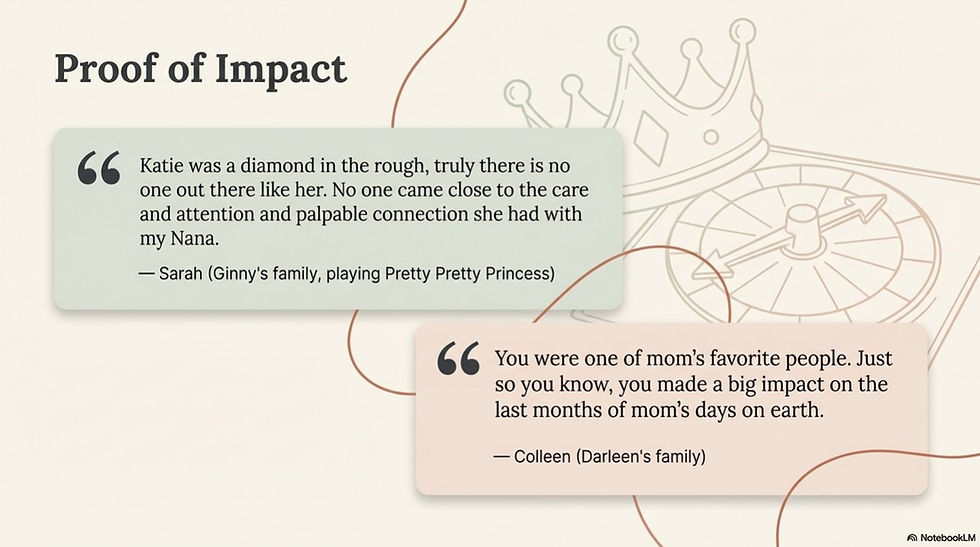
A warm, familiar voice at the same time every morning. Someone asking what they had for breakfast and whether they went outside yet. Someone who notices when they seem a little flat and gently asks about it. Someone who encourages the glass of water, the short walk to the mailbox, the conversation about something other than the television.
Someone who shows up — consistently, faithfully, warmly — every single weekday without fail.
That daily presence is not a luxury. For a sedentary, isolated senior it is one of the most powerful health interventions available.
And it starts with a phone call.
If you recognized someone you love in this article — please do not wait.
Not because things are already bad. But because they do not have to get bad at all.
At No Senior Left Behind LLC I provide personal daily phone and video check-ins for seniors living independently across the United States — Monday through Friday, every single weekday, always delivered by me personally.
Not an automated system. Not a stranger. A consistent, caring, familiar voice that your loved one looks forward to every single morning.
Only $19 a day.
Because the seniors who thrive are the ones who take preventative measures.
And it is never too early — and rarely too late — to be that someone. 💙
Katie Rodne is the founder of No Senior Left Behind LLC, offering virtual daily check-ins for senior citizens nationwide. Based in Morris, Minnesota, she brings years of hands-on caregiving experience and a deep personal passion for making sure no senior feels forgotten.


Comments